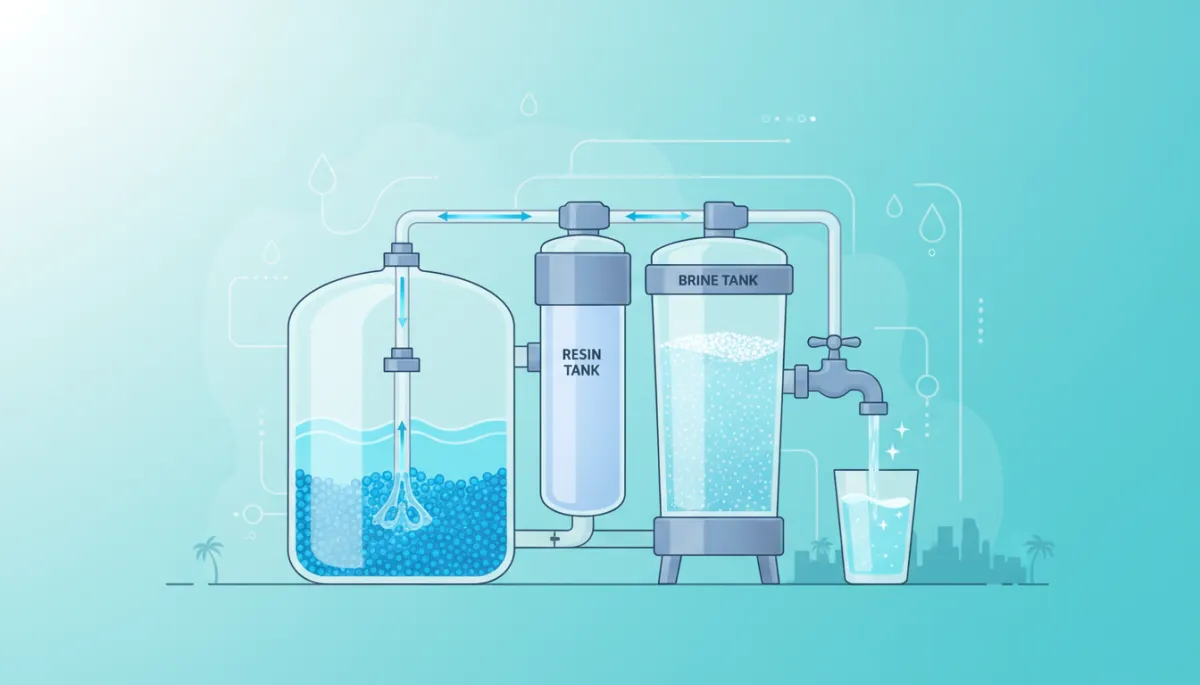
Salt Water Softener System How Does It Work
Home Improvement, Water Quality, Salt Water Softeners
Salt Water Softener Systems: How They Work and Whether You Need One
If you live with cloudy shower doors, stiff laundry, or that stubborn white scale on your faucets—especially common with hard water in San Diego you’ve probably wondered whether a salt water softener system could solve it. This guide explains, in clear everyday language, how a water softener works, what “ion exchange” and “regeneration” really mean, and how salt water softener systems compare with salt-free alternatives so you can choose the best option for your home and family.
What Is “Hard Water” and Why Is It a Problem?
To understand how a water softener works, it helps to start with hard water. Hard water is simply water that contains high levels of dissolved minerals, mainly calcium and magnesium. These minerals come from natural rock and soil the water passes through before it reaches your tap. They’re not dangerous to drink, but they cause a long list of everyday headaches around the house.
If you’re dealing with hard water in San Diego, you may notice:
White, chalky buildup on faucets, showerheads, and glass doors (called limescale)
Soap that doesn’t lather well and leaves a film on your skin and hair
Towels and clothes that feel rough or look dull after washing
Scale buildup inside water heaters, dishwashers, and pipes, which can shorten their lifespan and raise energy bills
📌 Key Takeaway: Hard water isn’t a health emergency, but it’s a major nuisance that can quietly damage your plumbing and appliances over time.
How Does a Water Softener Work? The Simple Version First
At its core, a salt water softener system takes in hard water and sends out soft water by pulling out the hardness minerals. The most common type, used in homes across the country, is called an ion exchange water softener. Despite the technical name, the basic idea is surprisingly simple:
Hard water enters a tank filled with tiny plastic beads (called water softener resin beads).
The resin beads grab onto the calcium and magnesium minerals and hold them.
In exchange, the beads release a small amount of sodium or potassium into the water.
The now “softened” water, with hardness removed, flows to your faucets, shower, and appliances.
That’s the everyday answer to “how does a water softener work?” It trades the hardness minerals for something that does not cause scale—typically sodium. Next, let’s look more closely at the parts inside a typical whole home system and how they work together.
Inside a Salt Water Softener: Main Components Explained
A standard whole home water softener has three main parts, no matter where you live—whether you’re dealing with hard water in San Diego or anywhere else in the country:
Mineral (resin) tank: This tall tank holds the water softener resin beads. It’s where the actual softening happens as water flows through and hardness minerals are removed via ion exchange.
Brine tank: A shorter tank that you fill with salt pellets (or sometimes potassium). When the system needs to clean itself, it makes a strong salt-water solution here called brine.
Control valve and head: The “brain” of the system. It directs water flow, tracks how much water you use, and decides when it’s time for the system to regenerate (clean and recharge the resin).
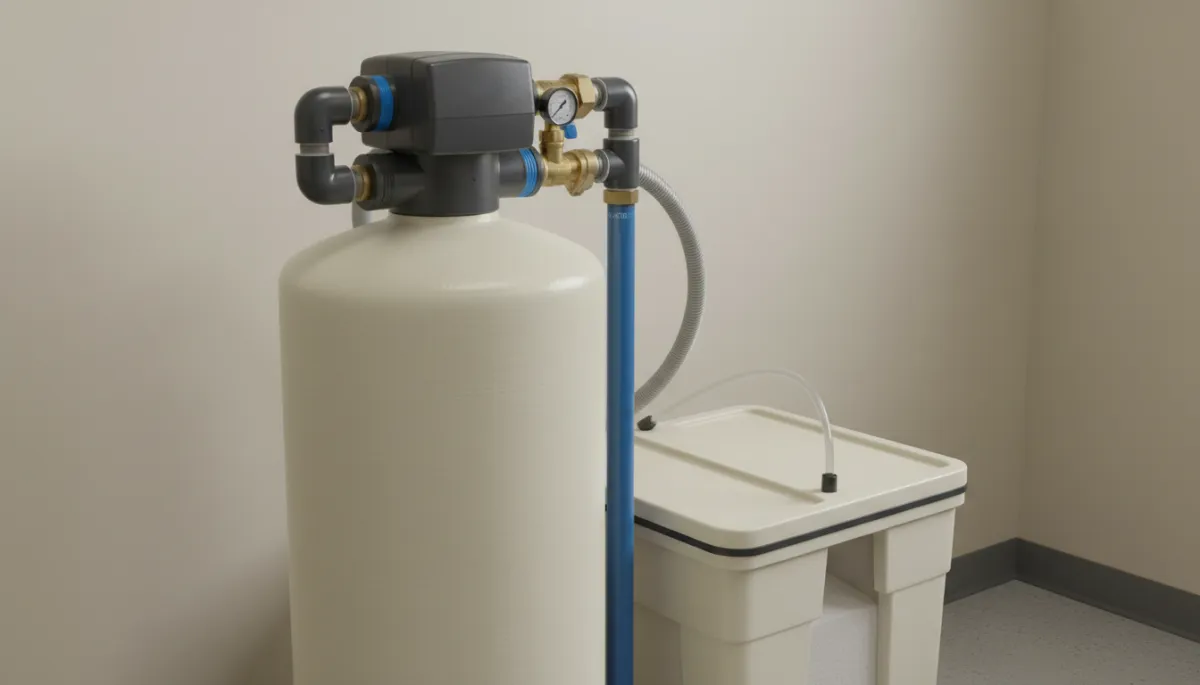
A properly sized whole home softener protects plumbing, fixtures, and water-using appliances from scale.
Ion Exchange Water Softener: What’s Really Happening on the Beads?
The heart of the system is the ion exchange water softener process. Each resin bead is made of a special plastic material that carries a negative charge. Before the system ever treats your water, the installer “charges” these beads with positively charged sodium ions from salt. Think of the beads as tiny magnets holding billions of sodium ions on their surface.
When hard water flows through the mineral tank, the calcium and magnesium ions (which also carry a positive charge) are more strongly attracted to the resin beads than the sodium. As water passes by, the beads grab onto the hardness minerals and let go of the sodium in their place. This is the “exchange” in ion exchange:
Calcium and magnesium stick to the beads and are removed from the water.
Sodium ions detach from the beads and go into the water instead.
The result is classic “soft water” that feels silkier on your skin, helps soap lather better, and dramatically reduces scale buildup on surfaces and inside pipes and appliances.
💡 Pro Tip: If you’re concerned about sodium, you can use potassium chloride instead of standard softener salt, or install a separate drinking water filter for your kitchen tap.
What Does Water Softener Regeneration Mean?
Over time, the water softener resin beads become loaded with calcium and magnesium. When they’re “full,” they can’t grab any more hardness, and the system would eventually stop softening your water. That’s where regeneration comes in.
So, what does water softener regeneration mean in simple terms? It’s the automatic self-cleaning cycle that flushes hardness minerals off the resin beads and recharges them with sodium from the salt in the brine tank. During regeneration, the system typically goes through several stages:
Backwash: Water flows in reverse through the resin tank to fluff the beads and wash out any debris or sediment to the drain.
Brine draw: The control valve pulls the salty brine solution from the brine tank into the resin tank. The high concentration of sodium in the brine forces calcium and magnesium off the beads and replaces them with sodium again.
Rinse: Fresh water rinses out the excess brine and remaining hardness minerals to the drain, leaving the beads clean and recharged for another cycle of softening.
Modern systems usually regenerate in the middle of the night when water usage is low, so you may never even notice the process happening—other than hearing some water flowing to the drain occasionally. The only thing you typically need to do as a homeowner is keep the brine tank filled with softener salt pellets and schedule occasional maintenance.
Salt Water Softener vs Salt Free: What’s the Difference?
When shopping for a whole home system, you’ll quickly see two main categories: traditional salt water softeners and salt-free systems. The names can be confusing, and marketing language doesn’t always help, so it’s important to understand the real differences between a salt water softener vs salt free options.
Salt Water (Ion Exchange) Softeners
Actually remove hardness minerals (calcium and magnesium) from the water.
Use salt (or potassium) and ion exchange resin beads to soften water.
Require periodic salt refills and regeneration cycles that send brine to the drain.
Salt-Free Systems (Conditioners or Descalers)
Typically do not remove hardness minerals; instead, they change the way minerals behave so they are less likely to stick and form hard scale.
Often use media that “conditions” minerals or electronic devices that alter how minerals crystallize.
Don’t require salt or regeneration; maintenance is usually lighter.
📌 Key Takeaway: If you want true “soft water” feel and maximum protection from scale, a salt-based ion exchange softener is still the gold standard. Salt-free systems are better described as scale reducers, not traditional softeners.
Salt Water Softener Benefits for Your Home and Lifestyle
For households dealing with hard water—especially in regions like San Diego—the salt water softener benefits can be significant. Here are some of the most noticeable improvements you can expect when you install a properly sized whole home system:
Smoother skin and softer hair: Soft water rinses away soap and shampoo more completely, leaving less residue that can cause dryness or irritation. Many people notice that their skin feels less tight and their hair is easier to manage after showers.
Brighter laundry and softer fabrics: Without hardness minerals interfering, detergents work more effectively. Clothes and towels come out cleaner, feel softer, and colors stay brighter longer. You may also be able to use less detergent per load.
Less scale on fixtures and glass: Those stubborn white spots and cloudy film on shower doors and faucets become much easier to manage—or disappear entirely—because the minerals that cause them are no longer present in the water in large amounts.
Longer-lasting appliances and plumbing: Water heaters, dishwashers, and washing machines last longer and run more efficiently when they’re not clogged with scale. This can translate into real long-term savings on repairs and replacements.
Lower energy bills: Scale acts like insulation on your water heater’s heating elements, forcing it to work harder to heat the same amount of water. Soft water keeps the system cleaner so it can operate at peak efficiency.
Whole Home Water Softener in San Diego: Why It’s a Popular Upgrade
If you live in Southern California, you already know that the region’s water can be extremely hard. A whole home water softener in San Diego is less of a luxury and more of a practical investment in your property and comfort. Municipal water in the area often travels long distances and picks up minerals along the way, leading to hardness levels that are tough on plumbing and fixtures.
By installing a softener where the water line enters your home, you treat all the water used for showers, sinks, laundry, and appliances. This whole-house approach offers consistent protection and comfort in every room, rather than just at a single faucet. For homeowners in San Diego, this can also help preserve the appearance of high-end fixtures and finishes that are especially vulnerable to visible scale and spotting.
💡 Pro Tip: When getting quotes, ask local providers to test your water hardness and size the system based on your home’s number of occupants and bathrooms. Proper sizing helps minimize salt use while ensuring reliable soft water.
Common Questions About Salt, Health, and the Environment
Because salt is involved, many homeowners naturally have questions about how a salt water softener system might affect their health or the environment. Here are a few points to keep in mind as you evaluate your options:
Sodium levels in softened water: The amount of sodium added by a water softener is generally modest. For many people, it’s far less than what they consume from food. However, if you’re on a strict low-sodium diet, you may want to use potassium chloride in your softener or install a reverse osmosis system at the kitchen sink for drinking and cooking water.
Brine discharge: During regeneration, the system flushes salty water to the drain. Many regions, including parts of California, have specific regulations about how and where this discharge can occur. Reputable installers will ensure your system complies with local rules, and some newer softeners are designed to be more efficient and use less salt per regeneration cycle.
Maintenance and lifespan: With basic care—keeping the brine tank filled and scheduling occasional professional service—a quality softener can last many years. The resin beads themselves can last a decade or more, depending on water quality and usage.
Is a Salt Water Softener Right for You?
Choosing between a salt water softener vs salt free system comes down to your priorities and how severe your hard water problems are. If you’re mainly worried about heavy scale damaging your water heater, dishware, and plumbing—and you want that classic “soft water” feel in the shower—an ion exchange softener is usually the most effective and proven solution. The salt water softener benefits often outweigh the modest effort of adding salt and scheduling maintenance, especially in hard-water areas such as San Diego.
On the other hand, if you have mild hard water, are highly sensitive to sodium, or live in an area with strict discharge rules, a salt-free conditioner could still offer some scale reduction with less upkeep. Just remember that most salt-free systems do not actually remove hardness minerals; they simply change how those minerals behave so they are less likely to stick to surfaces.
Practical Steps: How to Move Forward
If you’re ready to explore a whole home water softener in San Diego or any other city, here’s a simple action plan:
Test your water hardness: Many local companies will test your water for free, or you can buy an inexpensive test kit. Knowing your hardness level (in grains per gallon or parts per million) helps you choose the right size system.
List your priorities: Are you more focused on protecting appliances, improving skin and hair comfort, or reducing cleaning time? Clarifying your goals helps you decide between salt-based and salt-free options and any add-on filters you might want.
Get multiple quotes: Talk with reputable local installers, ask about warranty terms, salt efficiency, and how often the system will regenerate. Make sure the installer is familiar with local regulations, especially if you’re in a region with strict wastewater rules.
Plan for maintenance: Ask what routine care the system will need—how often you’ll add salt, how to keep the brine tank clean, and when to schedule checkups. A little planning upfront keeps your softener running smoothly for years.
Final Thoughts: Softer Water, Easier Living
Living with hard water—whether in San Diego or anywhere else—doesn’t have to be your long-term reality. Understanding how a water softener works, what water softener regeneration means, and how water softener resin beads use ion exchange to remove hardness gives you the confidence to make an informed choice for your home. A carefully selected salt water softener system can transform daily routines: showers feel better, cleaning takes less effort, and valuable appliances stay in good condition longer.
As you compare a salt water softener vs salt free setup, keep your specific water conditions and lifestyle in mind. For many households facing stubborn hard water in San Diego and similar regions, the proven salt water softener benefits make an ion exchange system a smart, long-term investment in comfort, convenience, and the health of your home’s plumbing. With the right system in place, every shower, load of laundry, and glass of water can quietly remind you that softer water really does make everyday life a little easier.
