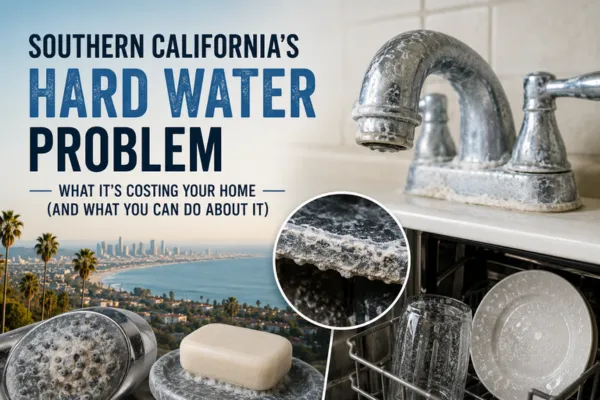
Why Southern California Has the Hardest Water in the US
“Not only are bloggers suckers for the remarkable, so are the people who read blogs .” - Clinton Dye
Introduction:
If you've ever noticed white crusty buildup around your faucets, soap that refuses to lather, or dishes that come out of the dishwasher looking worse than when they went in, you're not imagining things. Southern California has a serious hard water problem, and most homeowners have no idea what it's costing them.
California's average water hardness sits at 9.0 GPG, which is 2.7 GPG above the US average of 6.3 GPG. Of the 25 largest cities measured, 17 (68%) have hard or very hard water above 7 GPG. In cities like San Diego, Chula Vista, Riverside, and Temecula, that number climbs even higher. This isn't a minor inconvenience. It's a slow, silent drain on your home, your appliances, and your wallet. Culligan Escondido
Here's why SoCal water is so hard, what it's doing to your home right now, and what you can do about it.

It All Starts With the Colorado River
Southern California doesn't have the luxury of abundant local rainfall. Over the past 30 years, imported water has accounted for 86% of San Diego's water supply on average, due to limited local precipitation. The primary source is the Colorado River, along with Northern California via the State Water Project. Culligan Escondido
The problem with Colorado River water isn't where it ends up. It's everything it picks up along the way.
The Colorado River flows through the limestone and mineral-rich geology of the Southwest, accumulating calcium and magnesium as it travels. By the time it reaches major distribution points, hardness levels run among the highest of any major water source in the US. Every mile of desert terrain the water crosses adds more dissolved minerals before it ever reaches your tap. HomeWater
Once it arrives in Southern California, it gets pumped through aging distribution infrastructure, picking up even more mineral content along the way. By the time it reaches your showerhead, it's carrying a heavy mineral load that no amount of scrubbing will fix.
The Numbers City by City
The hard water problem isn't evenly distributed across SoCal, but it's hard to find a city that escapes it entirely.
San Diego ranks as the hardest at 16.3 GPG. Chula Vista, Riverside, Fontana, and Moreno Valley all fall in the hard to very hard category, with TDS levels in several cities exceeding the EPA's secondary guideline of 500 ppm. Culligan Escondido
To put that in context, very hard water above 10.5 GPG leads to significant buildup in pipes, faucets, and water heaters, while water above 14.5 GPG causes ongoing issues throughout the home and is classified as extremely hard by the USGS. San Diego sits squarely in that extreme category. SoftPro® Water Systems
Temecula and Riverside fare no better. Agricultural groundwater sources and Colorado River supply combine to push mineral content well above comfortable levels, with contaminants including chromium-6, arsenic, and radioactive radium detected in regional water testing.
What Hard Water Is Doing to Your Home Right Now
Hard water isn't just an aesthetic problem. It's a financial one, and the costs compound quietly over time.
Your appliances are dying early. Mineral buildup greatly compromises efficiency and longevity, forcing costly replacements within just a few years. 75% of water heaters fail by year 12 due to hard water damage, costing homeowners $1,500 to $3,000 to replace. Tankless water heaters in hard water homes fail even faster, often within just a few years of installation. Tapwaterdata
Your energy bills are higher than they should be. Hard water can increase energy costs by up to 29% for water heaters and up to 24% for washing machines because scale buildup forces heating elements to work harder to produce the same results. SoftPro® Water Systems
Your plumbing is under constant attack. On average, homeowners pay $5,000 per insurance claim for plumbing failures caused by hard water. In homes with extremely hard water, the damage can be so severe that whole-house repiping is needed within 10 to 15 years, an expensive project costing anywhere from $5,000 to $15,000. Tappwater
The hidden costs add up fast. Across regions with very hard water, households often spend roughly $400 to $900 per year on added maintenance, service calls, scale removal, and earlier-than-expected equipment replacement. Most homeowners chalk these expenses up to normal wear and tear, never connecting them to water quality. LADWP
Hard Water vs. Your Health
Beyond the damage to your home, hard water affects you personally every day. Dry, itchy skin after showering. Hair that feels brittle and dull no matter what shampoo you use. Soap that refuses to produce a real lather. These aren't product problems. They're water problems.
While hard water itself isn't classified as a direct health risk, the contaminants that often come alongside it in Southern California water are a different story. PFAS have been detected in 21 of 25 California cities tested, with hexavalent chromium, arsenic, and lead detected in multiple SoCal water systems. These contaminants don't care how often you clean your faucets. Culligan Escondido
The Solution: Don't Fight the Buildup, Stop It at the Source
The good news is that hard water is one of the most solvable water problems there is. At Pure Coast Water Co., we install solutions designed specifically for Southern California's water profile:
Whole-House Water Softeners use an ion exchange process to remove calcium and magnesium before they ever enter your plumbing system. Every tap, every shower, every appliance gets softened water. Homes with softened water see up to 40% lower water heater operating costs and appliances that last significantly longer. Tappwater
Reverse Osmosis Systems take filtration a step further, removing not just hardness minerals but PFAS, chromium-6, arsenic, and other contaminants detected in SoCal water. These are ideal for drinking and cooking water, giving your family clean, great-tasting water straight from the tap.
Scale Prevention Systems are an excellent option for homeowners who want to protect their plumbing and appliances without the salt-based softening process. These systems condition the water so minerals can't stick to surfaces, stopping buildup before it starts.
The Bottom Line
Southern California's hard water problem isn't going away. As long as the region depends on Colorado River supply and aging infrastructure, mineral-heavy water will continue flowing into homes across San Diego, Chula Vista, Temecula, Riverside, and beyond.
The question isn't whether your water is hard. It almost certainly is. The question is how long you're going to let it quietly damage your home before doing something about it.
Pure Coast Water Co. serves a 90-mile radius from San Diego, covering every community along the I-5 and I-15 corridors. We offer free water testing so you know exactly what you're dealing with, and we'll recommend the right solution for your home and budget, no pressure, no guesswork.
Ready to find out what's in your water? Call Pure Coast Water Co. today or click below to schedule your free water test.
Clinton Dye is a USMC Veteran and founder of Pure Coast Water Co., serving San Diego and Southern California with whole-house filtration, reverse osmosis, and water softening solutions.
